
Decisions
What was chosen, the alternatives, and the constraints behind it.
Systems that connect physical events, local processing and records someone can inspect.
Retain the source context, the observation and the result together. The boundary between them is part of the system's design.
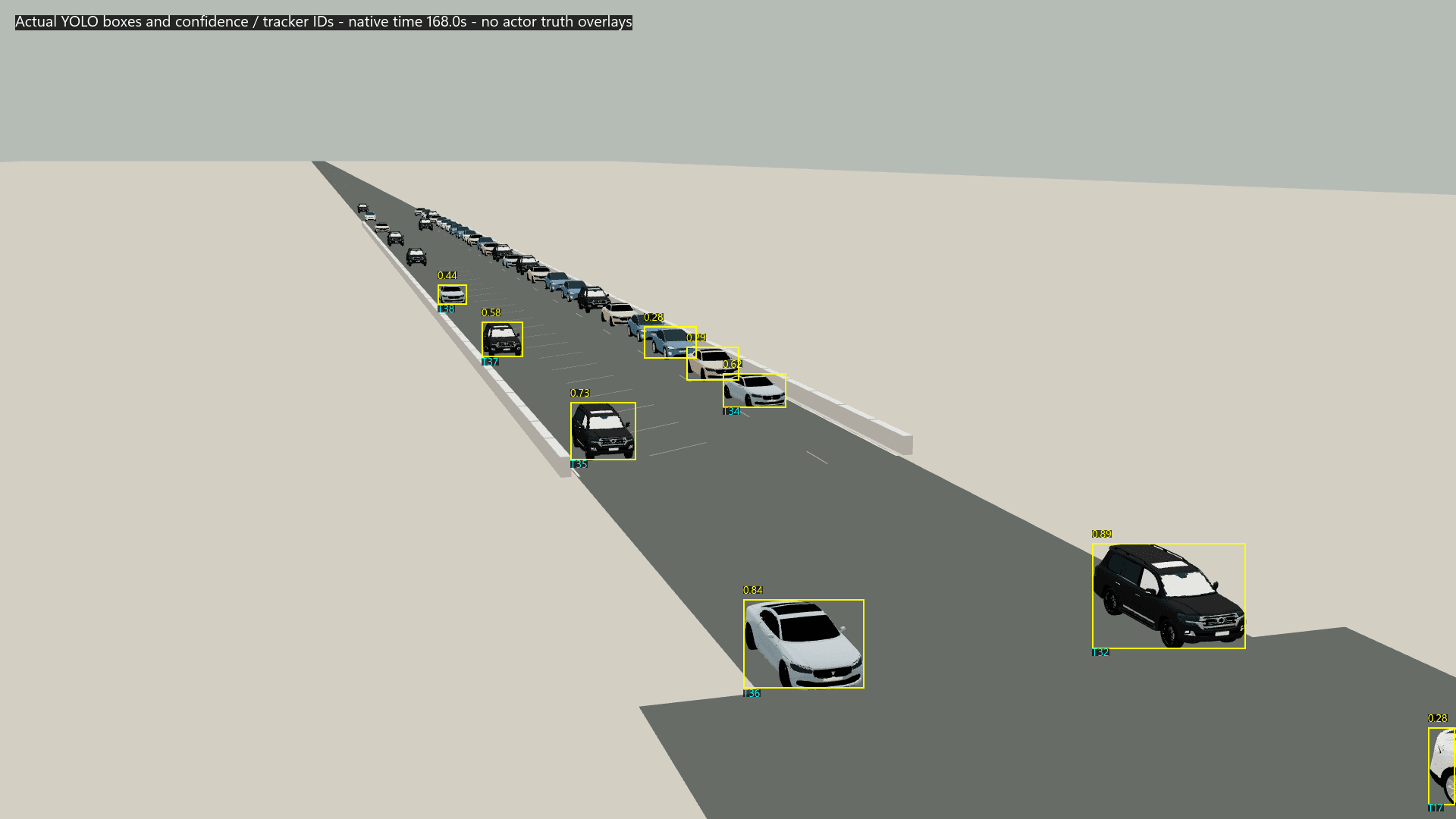
A sensor observes a limited part of the physical world through a particular position, calibration and sampling process. We begin by defining what can be observed and what the proposed decision requires. The architecture needs to preserve uncertainty instead of converting every missing measurement into an invented answer.
LaneSplitter investigates this boundary through controlled traffic scenes and an actual camera-to-evidence pipeline. Its simulation viewer and detector are separate paths. That distinction guides the service: visualization helps inspect a system, while measured sensor evidence evaluates what the system can actually detect.
Where the workflow requires it, we design local processing and persistence so the first record does not depend on remote delivery. Storage, resource limits and retry behavior need explicit contracts. Connection loss, disk exhaustion and power loss are different cases that require their own verification.
Setup access and normal operation deserve separate treatment. LaneSplitter's normal operation is outbound-only; a temporary setup interface is deliberately enabled for configuration. The appropriate boundary depends on the device and operators, but it should be a decision rather than the accidental persistence of a development interface.
A useful event record includes the observations that support it and the configuration under which it was produced. We design review around source material, timeline, identities, measurements, limitations and delivery state. Evidence hashes support integrity checking; they do not establish a signed chain of custody by themselves.
Public demonstrations use reviewed and clearly attributed artifacts. Private operational records remain behind the appropriate access boundary. A sample can teach the shape of the system without exposing a live camera, private location history or confidential material.
Validation begins with controlled cases and useful negative controls. We separate model behavior, pixel inference, runtime performance and field validation. A successful policy case does not establish camera coverage; a passing build does not establish field accuracy. Reports need to make those differences easy to understand.
This is specialist systems design and implementation, not a claim that LaneSplitter is a ready national enforcement platform. Bring the observation problem, available sensors and review requirements. We can define a bounded experiment and the evidence needed to decide what follows.
What was chosen, the alternatives, and the constraints behind it.
How normal work proceeds and where a person intervenes.
A bounded implementation or change plan agreed from the actual system.